Set Up Your WhatsApp Channel With Twilio
Before you start, make sure your phone number is registered as a WhatsApp sender in Twilio. The Twilio WhatsApp Sandbox can be used for testing.
Step 1. Open your Hoory AI dashboard. Go to Settings → Channels and click Create New Channel.
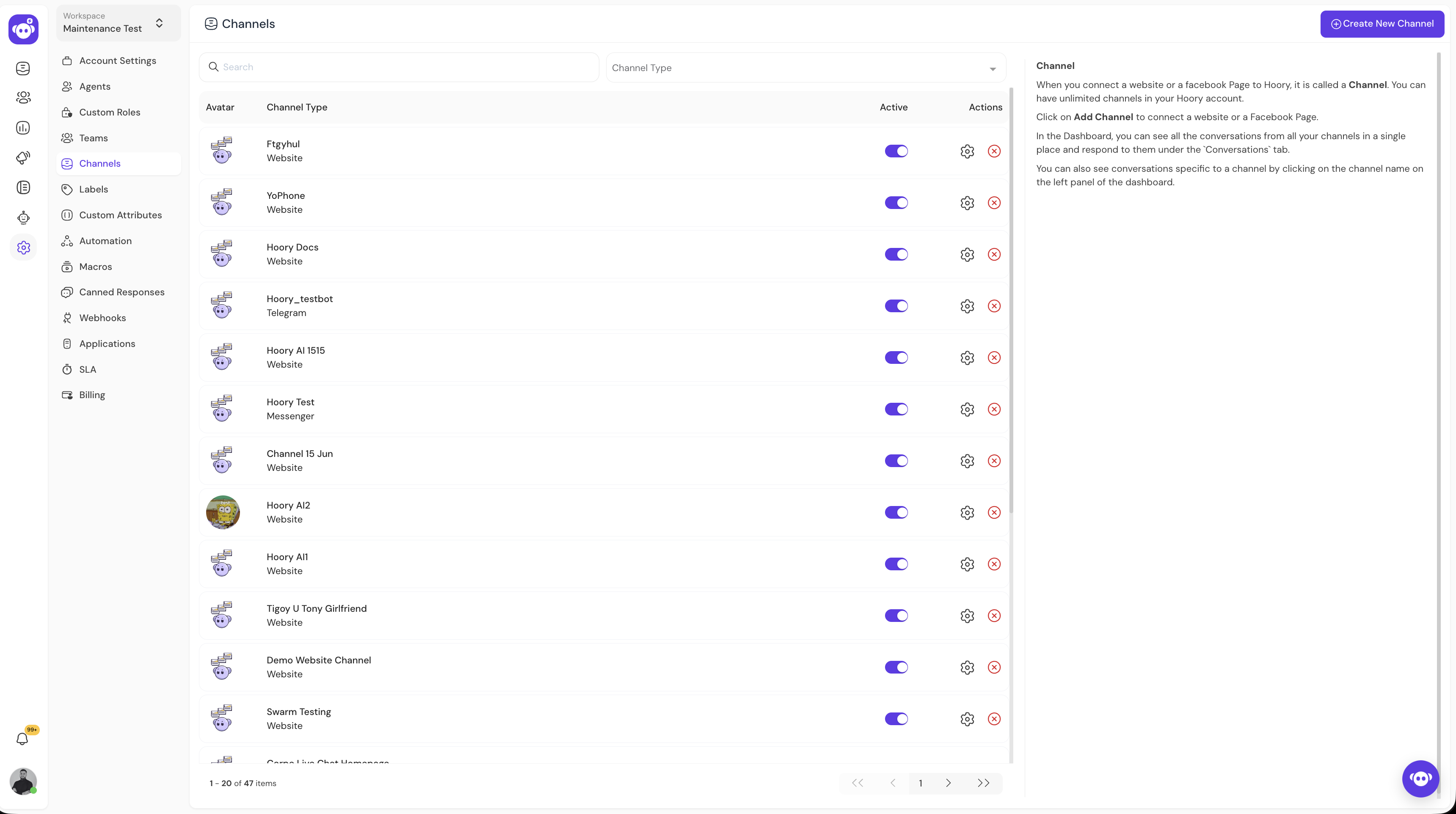
Step 2. Click the "WhatsApp" icon.
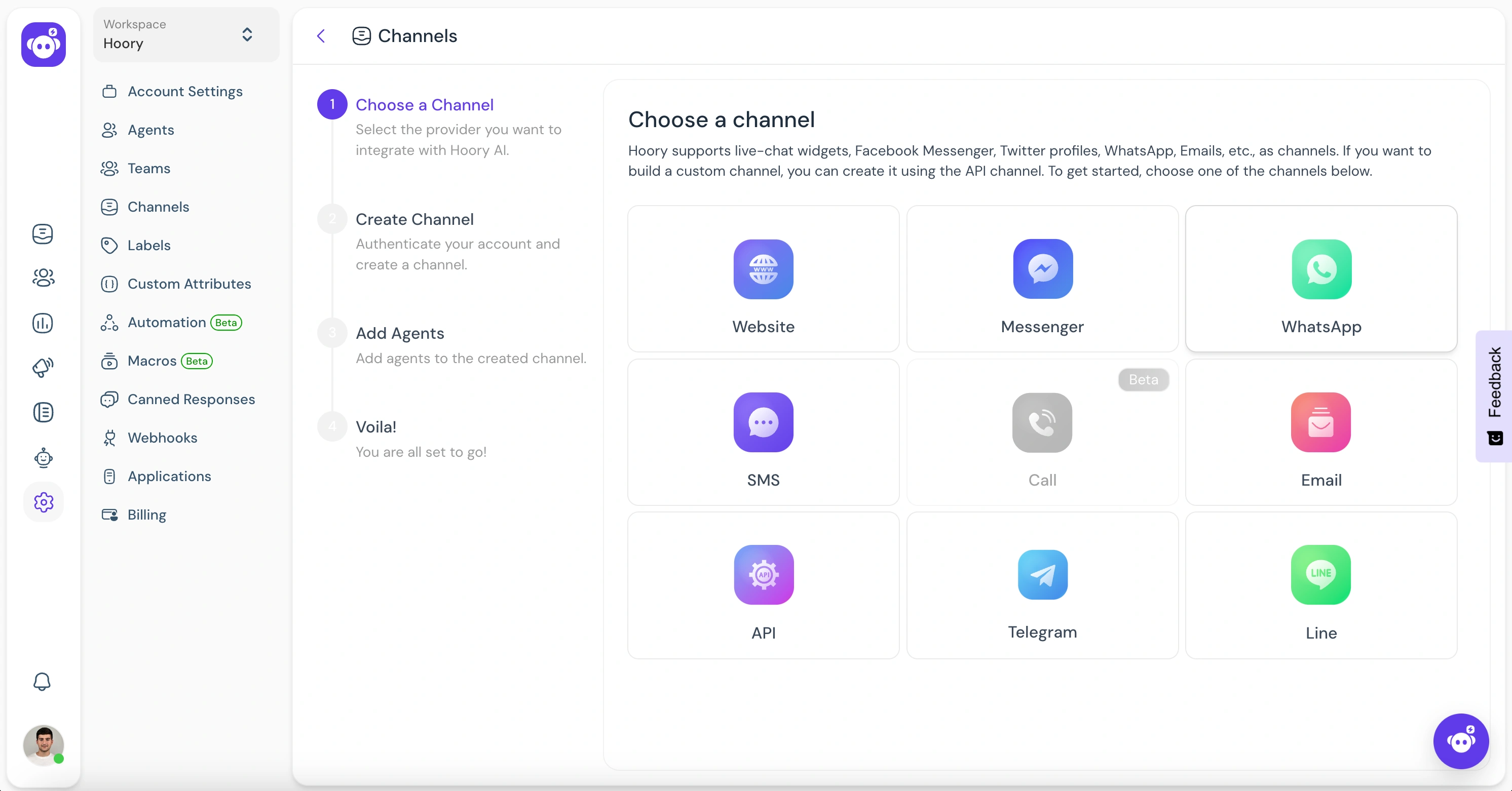
Step 3. Choose "Twilio" as the API Provider and fill in the channel details.
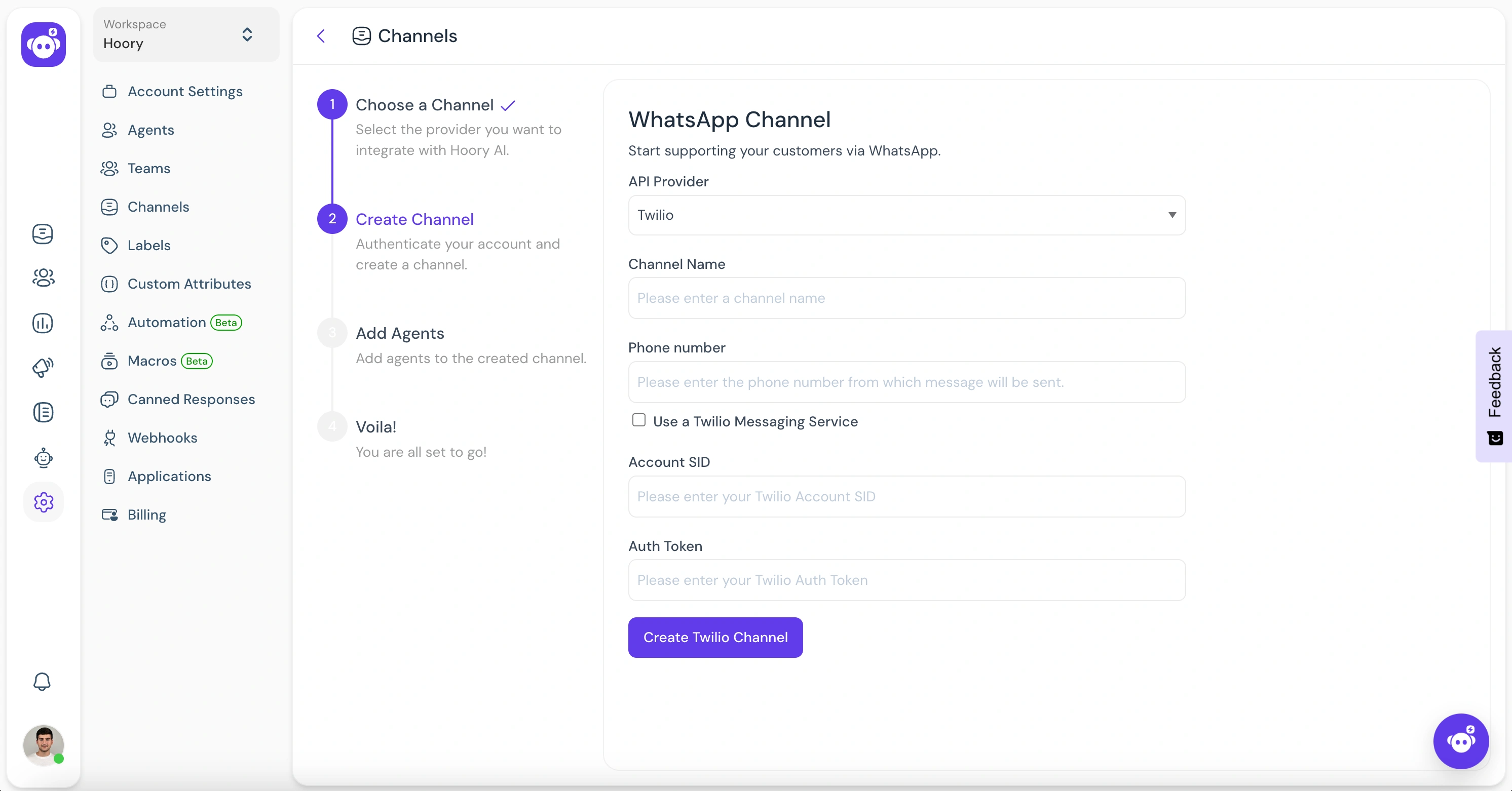
| Input | Description | Where can I find it |
|---|---|---|
| Channel Name | This is the channel name. It will be used across the application. | N/A |
| Phone Number | This is the WhatsApp number you will be using to communicate with your customers. It has to be registered as a WhatsApp sender in Twilio. Enter it in E.164 format, starting with a + sign and without spaces (for example, +14155550100). | The WhatsApp senders list in your Twilio Console |
| Use a Twilio Messaging Service | Check this box if you want to send messages through a Twilio Messaging Service instead of a single phone number. When checked, the Phone Number field is replaced by the Messaging Service SID field. | N/A |
| Messaging Service SID | The SID of your Twilio Messaging Service. Required only when "Use a Twilio Messaging Service" is checked. | Twilio Console → Messaging → Services |
| Account SID | Account SID in Twilio Console | Login to Twilio Console. Here, you would be able to see the Account SID and the Auth Token. |
| Auth Token | Auth token for the account | Login to the Twilio Console. Here, you would be able to see the Account SID and the Auth Token. |
Click Create Twilio Channel after filling in the information. If the credentials are incorrect, you will see the message "We were not able to authenticate Twilio credentials, please try again".
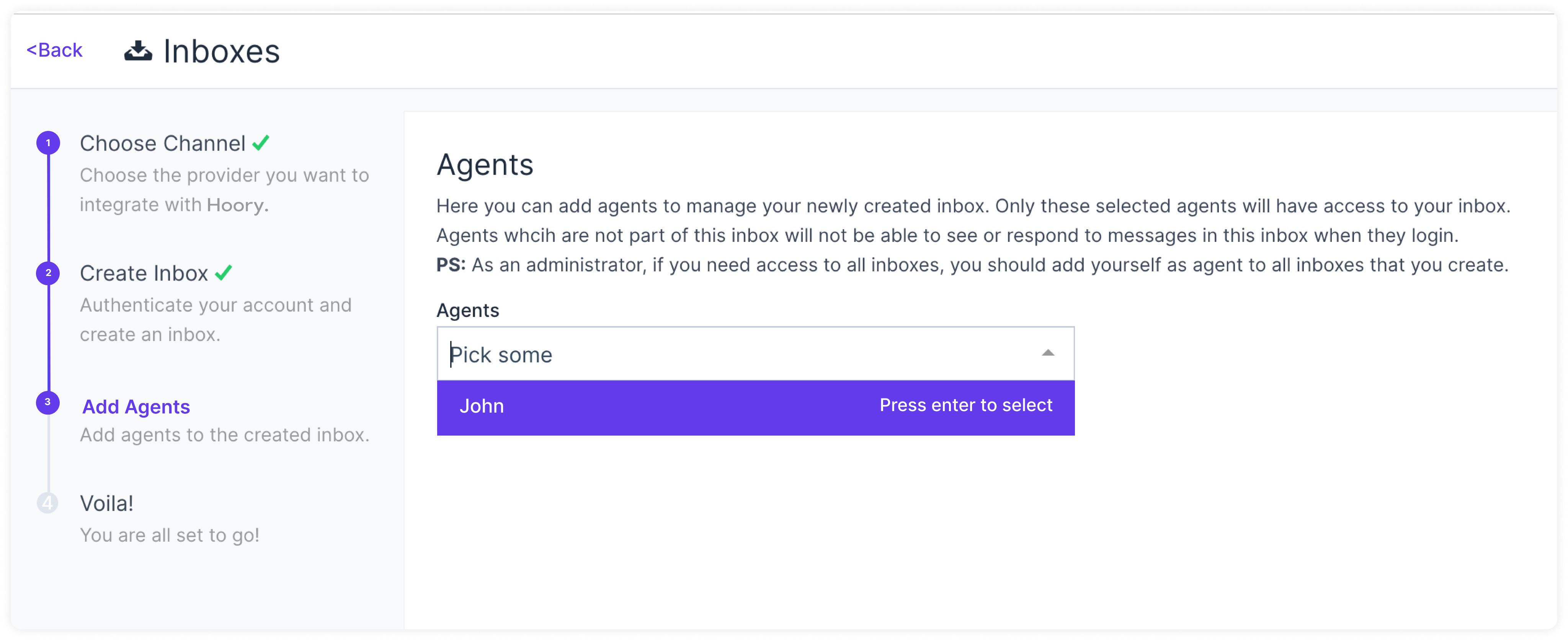
Step 4. Add agents to your channel. Select at least one agent in the Agents field. Only the selected agents will have access to this channel.
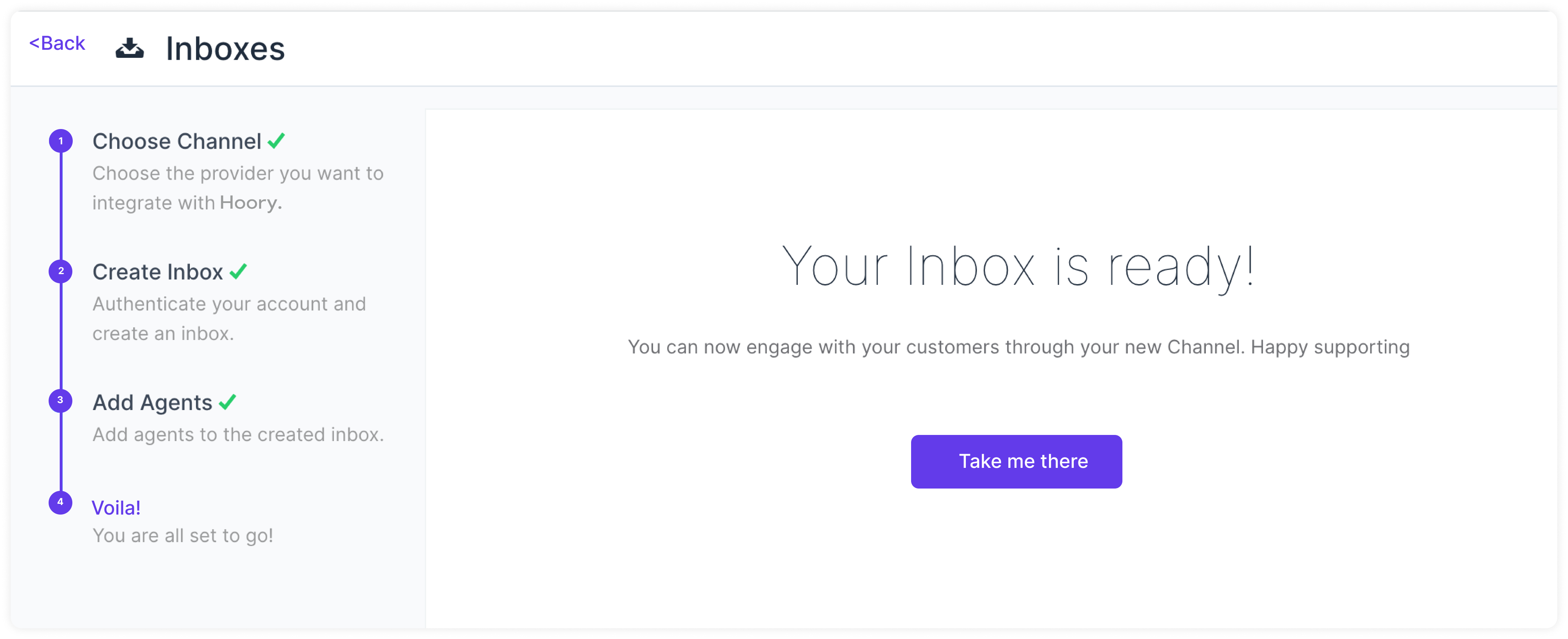
Step 5. Your channel is ready! The final screen shows the Callback URL for your channel. Copy it, as you will need it in the next step.
Configure the Callback URL in Twilio
To receive WhatsApp messages in Hoory AI, you have to configure the callback URL in Twilio.
- Login to your Twilio Console.
- Open the WhatsApp sender you used for this channel and edit its endpoint configuration. If you use a Messaging Service, go to
Messaging -> Services, open your service and use its Integration section instead. - Provide
https://app.hoory.com/twilio/callbackas the webhook URL for incoming messages and save.
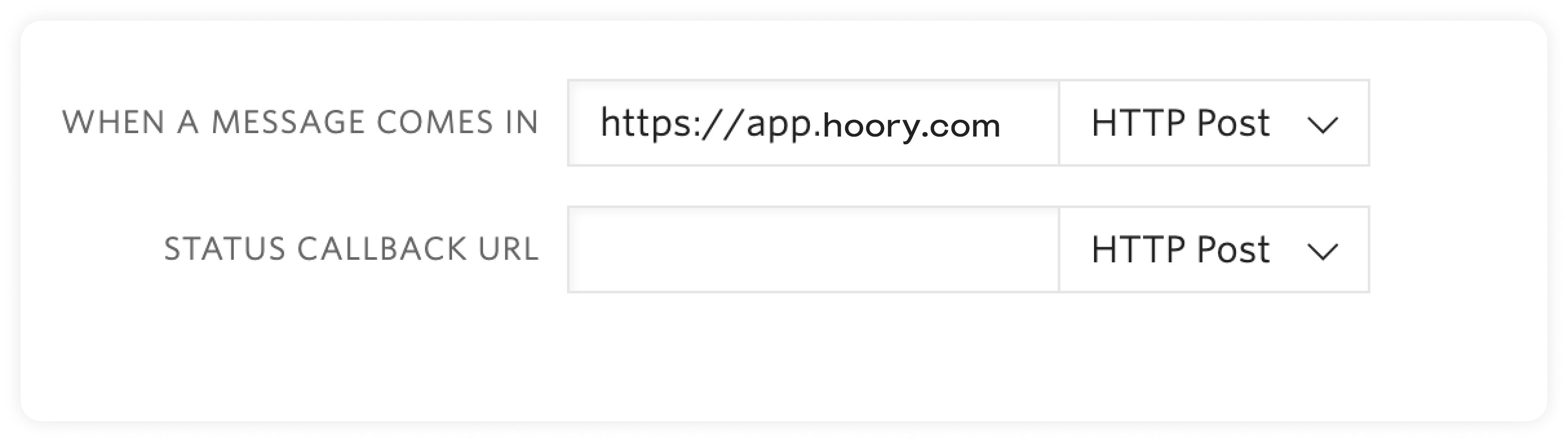
You can find the callback URL again at any time: go to Settings → Channels, click the ⚙️ icon next to your WhatsApp channel and open the Configuration tab.
Once the callback URL is set, you will start receiving the messages in your Hoory AI dashboard.
For SMS channels Hoory AI sets this webhook in Twilio automatically, but for WhatsApp channels you always have to set it yourself.
24-Hour Messaging Window
WhatsApp only lets businesses send free-form messages within 24 hours of the customer's last message. Hoory AI shows a banner in the conversation when the window has closed.
Sending WhatsApp message templates through Twilio is not supported in Hoory AI. Once the window has closed, you will not be able to reply until the customer sends a new message. If you need to start conversations or reply after 24 hours, use the WhatsApp Cloud provider instead.
Supported Attachments
Agents can send the following file types on a Twilio WhatsApp channel:
| Type | Formats |
|---|---|
| Image | image/png, image/jpeg |
| Audio | audio/mpeg, audio/opus, audio/ogg, audio/amr |
| Video | video/mp4 |
| Document | application/pdf |
Configuring Hoory AI with Twilio Studio
If you are using Twilio Studio for a custom conversation flow, updating the webhook URL directly will break your existing integration.
For such cases, you can follow the steps given below.
- Identify the step in your flow where you want the
agent handoffto happen. - Add a Make HTTP Request widget as shown below with the given values.
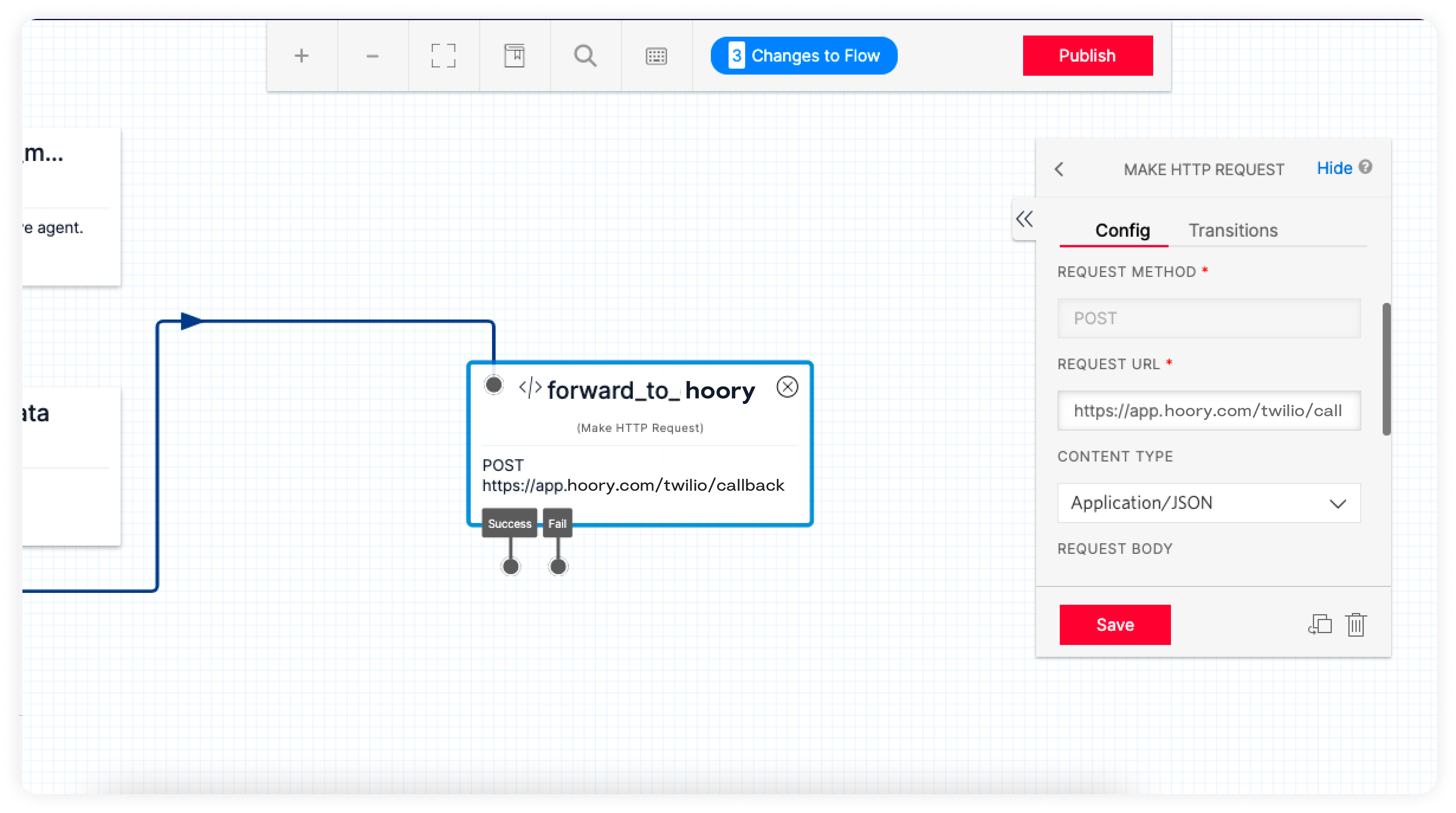
REQUEST METHOD: POST
REQUEST URL: https://app.hoory.com/twilio/callback
CONTENT TYPE: Application/JSON
REQUEST BODY: {{trigger.message | to_json }} Make changes as required based on your flow variables.
The HTTP request widget will forward the message body to Hoory AI. It will create a conversation in Hoory AI from where the agent can reply.
- Make sure that your flow can handle the user responses to agent replies.
Additional Channel Settings
Your freshly configured WhatsApp channel should now appear in your list of channels. To see it and to make additional settings in your WhatsApp channel, go to Settings → Channels → click the gear icon on the associated WhatsApp channel.
All the additional settings available are the same as those in your Facebook channel. We recommend going through this link to understand the same.